Vintage Paper Dolls – Dot & Peg: A Designer’s Take on Playful Nostalgia
Understanding the Charm Beyond the Scissors
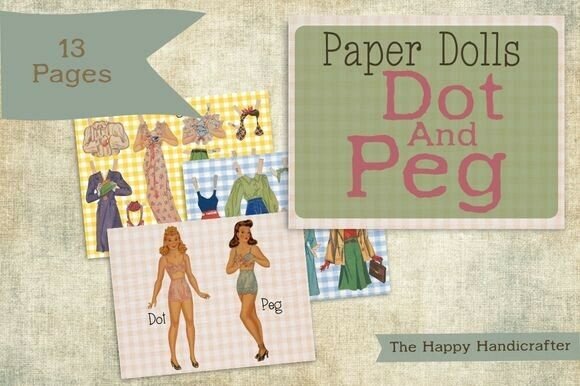
When you first open the Vintage Paper Dolls – Dot & Peg collection, you aren't just looking at a set of printable graphics; you are holding a tactile piece of mid-century history reimagined for modern creators. As designers and content creators, we often get bogged down in the rigid grid systems of digital layouts. This kit offers a necessary rebellion against that rigidity. It features beautifully illustrated retro figures—Dot and Peg—accompanied by a wardrobe that screams 1950s domestic chic. The visual style is defined by soft gingham backgrounds, gentle pastel hues, and hand-drawn linework that feels authentic rather than digitized.
The appeal here is the "imperfect" perfection of handcraft. In an era of vector precision, the slight texture of the paper and the whimsical cutout shapes provide a warmth that sterile modern typography often lacks. This isn't just a scrapbook element; it is a design asset that bridges the gap between nostalgic storytelling and contemporary graphic design. The color palette is intentionally muted, relying on soft pinks, creams, and baby blues that allow for easy integration into complex compositions without clashing.
Strategic Applications for Creative Professionals
For the entrepreneur or marketer, the utility of Vintage Paper Dolls – Dot & Peg extends far beyond personal journaling. Its visual language communicates specific brand values: care, nostalgia, whimsy, and authenticity. Here is how different professionals can leverage this style:
- Brand Identity & Packaging: If you are building a brand identity for a boutique bakery, a children’s clothing line, or a heritage product, these illustrations serve as excellent supporting graphics. They soften a brand identity and make it feel approachable.
- Editorial Design: In editorial design, break up dense blocks of text with these cutouts. They act as visual anchors that guide the reader's eye and provide breathing room. They work exceptionally well as spot illustrations in lifestyle magazines or blog posts.
- Social Media Graphics: On platforms like Instagram or Pinterest, where aesthetic cohesion is king, these elements allow for "sticker-style" layering. They are perfect for creating interactive stories or static posts that feel like a curated mood board.
- Digital Scrapbooking & Junk Journaling: The obvious use case remains the most potent. The kit is designed for layering. You can build complex, textured spreads that look like physical art, even when created digitally in Photoshop or Procreate.
Imagine using a gingham background from the kit as a texture overlay on a website hero image, with the paper doll figures acting as whimsical navigational markers. It turns a standard web design element into an interactive experience.
Integrating "Dot & Peg" with Typography and Layout
Using a collection like this requires a thoughtful approach to hierarchy. The illustrations are detailed and textured; therefore, your typography choices must provide contrast without competing for attention.
The Art of Font Pairing
Avoid pairing Vintage Paper Dolls – Dot & Peg with overly ornate script fonts or chaotic handwritten fonts. The kit already provides the "handmade" vibe. Instead, anchor the whimsical visuals with a clean, geometric sans serif font. A modern sans-serif provides the structural integrity needed to make the illustrations pop. Conversely, a classic serif font with high readability can bridge the gap between the vintage aesthetic and professional editorial design. Think of the typography as the "adult supervision" for the playful graphics.
Visual Hierarchy and Readability
When incorporating these assets into a layout, treat them as foreground elements. Because they feature soft edges and pastel tones, placing them behind dark text can reduce readability. Instead, use them in the margins, as headers, or as dividers between content blocks. This maintains a clear visual hierarchy, ensuring your message isn't lost in the decoration.
Practical Implementation and Workflow
For the content creator looking to integrate Vintage Paper Dolls – Dot & Peg into their workflow, here is a practical checklist to ensure maximum impact:
- Evaluate Project Fit: Does your project require a human touch? If you are designing for a fintech app, this might be too whimsical. If you are designing for a lifestyle blog or a packaging design for artisanal goods, it is a perfect fit.
- Color Grading: While the kit has its own palette, don't be afraid to apply a unifying color grade or filter if you are placing these assets into a photo-heavy composition. This ensures the "paper" texture doesn't look out of place.
- Mockups and Context: If you are selling these as design assets or using them in a pitch, mock them up in context. Show the paper dolls on a physical journal or a tablet screen. Context sells the concept.
- Licensing Check: Always review the commercial licensing terms. If you are using these for logo design elements or mass-produced merchandise, ensure the license covers print-on-demand or unlimited digital distribution.
The Emotional ROI of Nostalgic Design
Why does this style work so well in modern marketing? It triggers an emotional response. In a digital world, the tactile illusion of paper dolls creates a sense of comfort and familiarity. Using Vintage Paper Dolls – Dot & Peg isn't just about making things look "cute"—it is a strategic move to humanize a brand. It tells your audience that you value creativity, history, and the slower pace of handmade art.
Whether you are a small business owner designing a newsletter or a hobbyist creating a memory book, this collection offers a versatile toolkit. It encourages you to step away from the rigid constraints of standard stock photos and embrace a more narrative-driven approach to visual content. By mixing and matching the outfits and backgrounds, you are essentially engaging in a design thinking process—solving visual puzzles to create a harmonious whole.
Ultimately, Vintage Paper Dolls – Dot & Peg serves as a reminder that design should be fun. It bridges the gap between the professional and the personal, offering a playground for creativity that resonates with audiences of all ages. Pour that cup of tea, fire up your design software, and let these paper treasures transform your next project into a keepsake.